
Stop The Deaths conference 2026
Wednesday 26 August and Thursday 27 August
Radisson Blu Hotel, Glasgow
10am - 4.15pm
THIS EVENT IS NOW FULLY BOOKED
Our annual Stop The Deaths conference returns with a two-day event dedicated to reducing drug-related deaths and harms.
Timed to mark International Overdose Awareness Day, the conference will bring together key stakeholders, including policymakers, service providers, and health and social care professionals. Together, we will explore democratic policy development, service improvement and harm reduction practices.
Delegates will gain enhanced knowledge, fresh perspectives and actionable insights to strengthen their work.
People with living and lived experience are central to the programme on both days, ensuring learning is grounded in real-world perspectives and focused on meaningful change.
Together, we will stop the deaths.

Day One
Inequality, policy and the human impact of drug harms
The first day of our Stop The Deaths conference focuses on poverty and inequality as key drivers of drug-related harm, deepening understanding of how structural disadvantage, deprivation and social exclusion shape patterns of substance use – and highlighting the urgent need for responses rooted in equity and social justice.
Sessions will explore the impact of drug-related deaths on families and young people, alongside the significant – and often overlooked – role of alcohol in wider substance-related harm.
Set within a rapidly evolving political landscape, the programme will support delegates to understand and respond to national priorities, government decision-making and global drug policy developments.
Day Two
Emerging trends, substances and innovative responses
Day Two offers a forward-looking exploration of current and emerging issues in substance use, highlighting new trends, research and practical responses.
Sessions will examine substances of growing concern, including cocaine and ketamine, alongside innovative approaches such as drug checking services. Delegates will gain a deeper understanding of evolving patterns of use and their implications for practice, policy and service delivery.
A dedicated focus on neurodiversity and substance use will offer insight into how different cognitive experiences intersect with drug use, helping professionals better recognise and respond to diverse support needs.
Peer-led research will feature strongly throughout the programme, bringing forward real-world evidence and perspectives from affected communities to support meaningful, context-driven practice.
Conference programme
DAY 1 - Wednesday 26 August
09.30 | Refreshments and networking
From 9.55 prompt | Welcomes and introductions
Julie Heslin McCartney, Director of Operations, Scottish Drugs Forum
Kirsten Horsburgh, CEO, Scottish Drugs Forum
Session 1 - opening session
Conference opening
Maree Todd MSP, Minister for Mental Wellbeing, Public Health, Sport, Alcohol & Drugs, Scottish Government
Advocates For Change event and introduction, statement of intent and panel session
Jason Wallace, Programme Manager Lived and Living Experience, SDF
Living Experience Advocates for Change group
The politics of health inequalities in Scotland and the UK
David Walsh, Senior Lecturer in Health Inequalities, University of Glasgow
Session 2 - Impact
Chaired by Laura Mahon, CEO Scottish Families Affected by Alcohol and Drugs (SFAD)
Young people’s experiences of drug-related deaths
Clued Up Youth Forum – Sky Goodland, Amy King and Darcie Swanson, Clued Up Project
Family experiences of drug-related deaths
Stephanie Morrison, Families Campaign for Change
Followed by a panel discussion and Q&A.
Session 3 - National and International Policy Developments
Chaired by Jo-Anne Hamilton, Head of Policy and Communication, SDF
Global Commission on Drugs
Ruth Dreifuss, a Founding member of the Global Commission on Drug Policy and former President of the Swiss Confederation
Alcohol and Drug Strategy
Alcohol policy in Scotland – where are we now, and what next?
Elinor Jayne, Director, Scottish Health Action on Alcohol Problems (SHAAP)
Followed by a panel discussion and Q&A
Session 4 - Political Panel
Chaired by David Walsh, Senior Lecturer in Health Inequalities, University of Glasgow
Panellists
• Jackie Baillie MSP, Shadow Cabinet Secretary for Health and Care, Scottish Labour
• Ruth Dreifuss – a founding member of the Global Commission on Drug Policy and former President of the Swiss Confederation
• Adam Harley MSP, Scottish Liberal Democrats spokesperson for Health and Care
• Thomas Kerr MSP, Reform Party Scotland
• Gillian Mackay MSP, co-leader of the Scottish Green Party and Party Spokesperson for Constitution, External Affairs, Public Health and Sport
• Maree Todd, Minister for Mental Wellbeing, Public Health, Sport, Alcohol and Drugs
CONFERENCE CLOSE
Conference closing remarks from Jason Wallace, Programme Manager Lived and Living Experience, SDF
DAY 2 - Thursday 27 August
09.30 | Refreshments and networking
From 9.55 prompt | Welcomes and introductions
Julie Heslin McCartney, Director of Operations, Scottish Drugs Forum
Kirsten Horsburgh, CEO, Scottish Drugs Forum
Session 1 - Neurodiversity and Substance Use
Chaired by Katy MacLeod, Research and Peer Engagement Programme Manager, SDF
Challenging the ‘moral failure’ label: ADHD, neurodivergence and drug use
Sarah Helm, Executive Director, Te Puna Whakati Pāmamae Kai Whakapiri (New Zealand Drug Foundation)
Drugs, autism and self stigma
AJ Martin, Co-Project Lead, Benzo Research Project
Followed by a panel discussion and Q&A
Session 2 - A Focus on Ketamine, cocaine and alcohol
Chaired by Danielle Wong, Emergency Responses Senior Officer, SDF
The ketamine crisis – a demonstration of bad drug policy and the power of community
Mat Southwell, Managing and Technical Director, coAct
What’s the Crack? Experience of MAT Standards Implementation for
People who use Cocaine/crack in four Scottish Health Boards
Louise Horn, Peer Research Development Officer, SDF
Simon Community Scotland’s Managed Alcohol Programme
Lorraine McGrath, Chief Executive, Simon Community Scotland
Followed by a panel discussion and Q&A
Session 3 - Drug Checking
Chaired by Emma Crawshaw, CEO Crew 2000 Scotland
Establishing Scotland’s national testing and research laboratory: An update from Scotland’s first drug Checking service.
Professor Niamh Nic Daeid & Dr Lorna Nisbet, Leverhulme Research Centre for Forensic Science
The Glasgow point of care drug checking service
Mary Clare Madden, NHS Greater Glasgow and Clyde Alcohol & Drug Recovery Services
New Zealand’s drug checking programme
Sarah Helm, Executive Director, Te Puna Whakati Pāmamae Kai Whakapiri (New Zealand Drug Foundation)
Followed by a panel discussion and Q&A
Session 4 - Conference Reflections and call to action
Chaired by Emir Taha, Training and Development Officer (Peer Naloxone), SDF
Featuring reflections from:
• Darren Anderson – Community Coordinator at Minds of Recovery and Scottish Drugs Forum board member
• Gareth Balmer – National Harm Reduction Lead at WithYou
• Tracey McFall – Chief Executive Officer at Scottish Recovery Consortium
• Chris McKellar – Advocates for Change representative
EVENT SPEAKERS
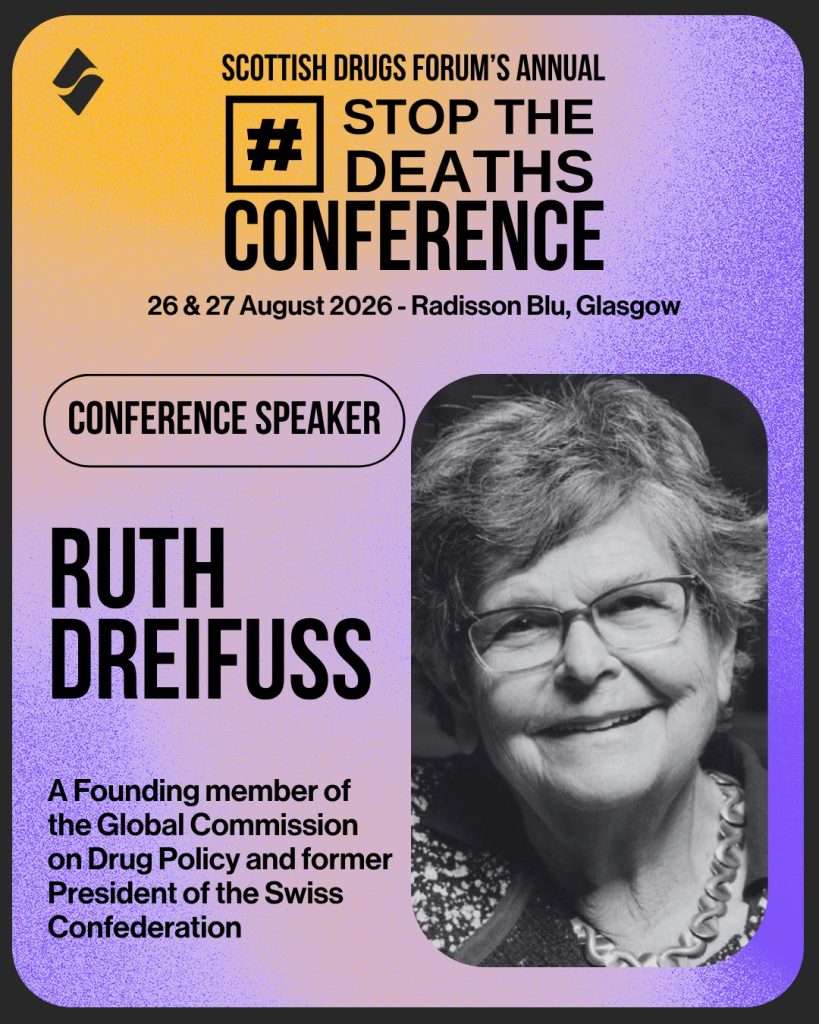
Ruth dreifuss
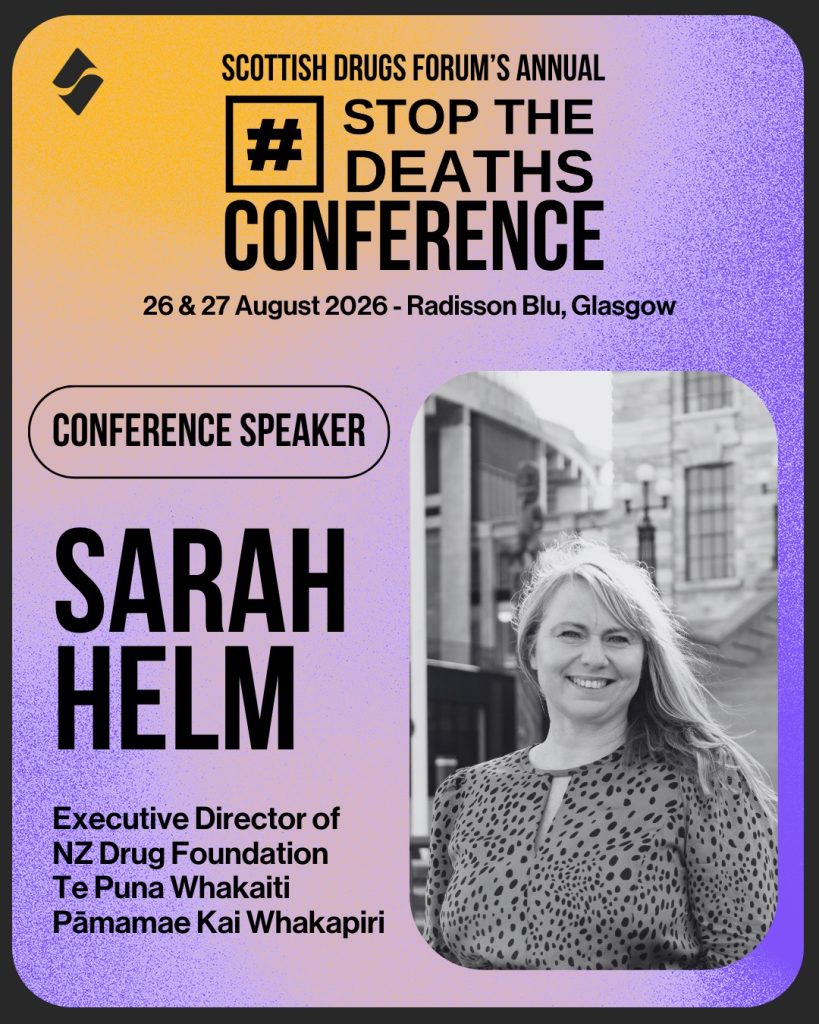
Sarah Helm (Pākehā, Kāi Tahu, Kati Mamoe, Waitaha)
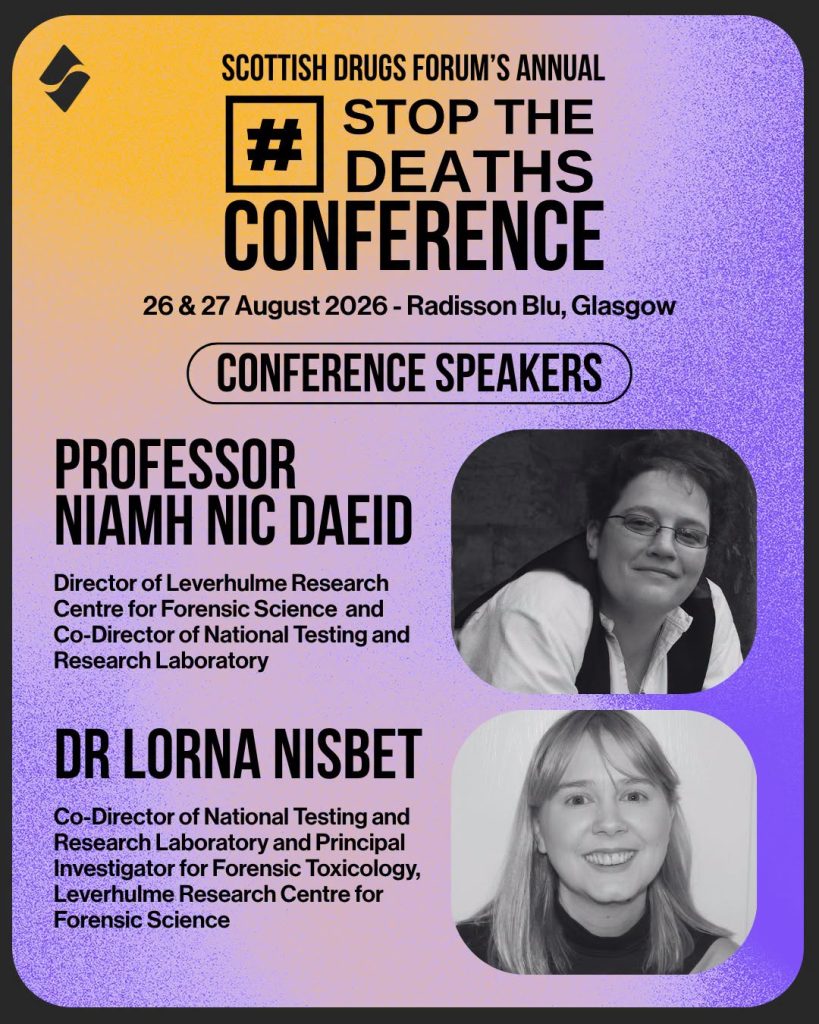
Professor Niamh Nic Daeid and Dr Lorna Nisbet
Professor Niamh Nic Daeid and Dr Lorna Nisbet will be speaking on Day 2 of our conference.
Their presentation will explore Scotland’s response to the rapidly changing drug market, including the development of the National Testing and Research Laboratory and the implementation of four point-of-care drug-checking sites across Scotland. The session will highlight how drug checking can support rapid harm reduction interventions and forensic analysis in response to emerging drug-related harms.
Professor Niamh Nic Daeid is Director of the Leverhulme Research Centre for Forensic Science at the University of Dundee and Co-director of the National Testing and Research Laboratory. An internationally recognised forensic scientist and analytical chemist, Niamh has over 30 years’ experience in forensic science education, research and casework.
Dr Lorna Nisbet is Principal Investigator for Forensic Toxicology at the Leverhulme Research Centre for Forensic Science, Co-director of the National Testing and Research Laboratory, and Programme Lead for the MSc in Drug Analysis and Toxicology. She also serves as a full council member of the Advisory Council on the Misuse of Drugs (ACMD).
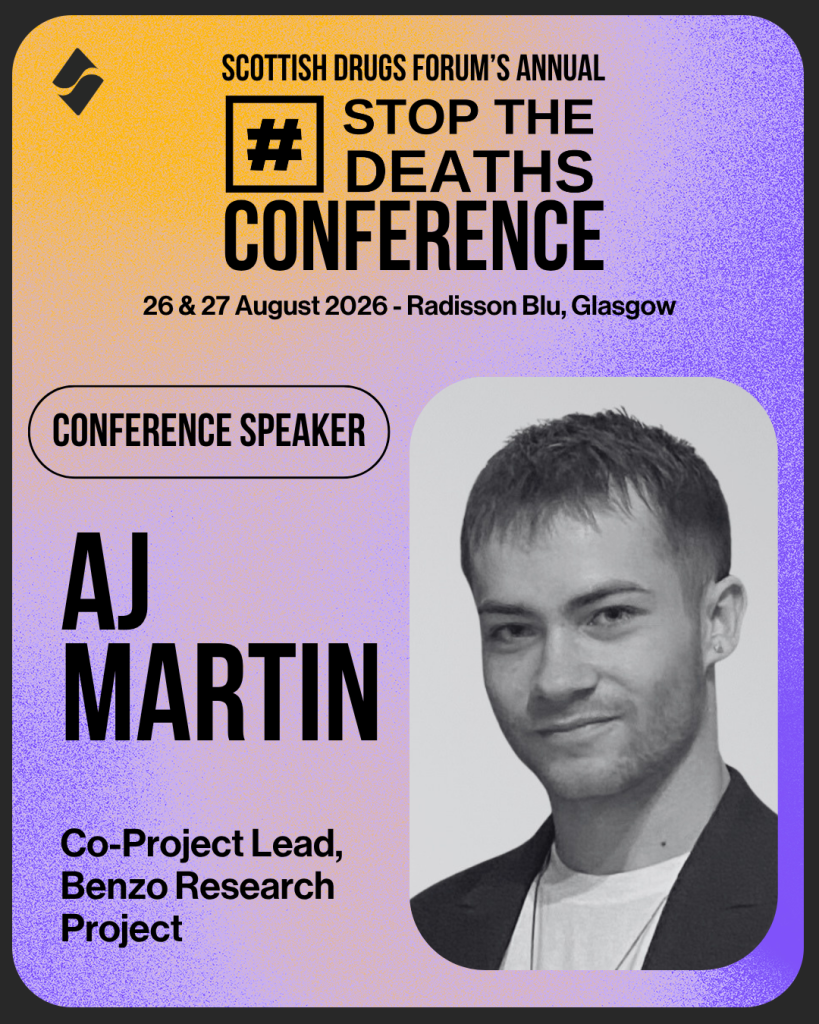
AJ Martin
AJ will discuss the connections between autism, drugs and society. Grounded in historical, scientific and experiential knowledge, AJ will explore how drugs are often used as a tool for survival in a neuronormative environment, while inviting us to consider how we can enter meaningful dialogue with neurodivergent communities to reduce drug-related harms.
AJ is a researcher and harm reduction advocate based in London. He is a PhD candidate and Co-Project Lead at the @benzoresearchproject, as well as a Students for Sensible Drug Policy (SSDP) alumnus. Since entering the harm reduction and drug policy space in 2021, AJ has focused on platforming the voices of young people who take drugs.
He has co-authored a qualitative research report on young people’s benzodiazepine use, presented on topics including nitazenes, student-led harm reduction and autism, and worked with drug services across the UK to improve support and staff training.
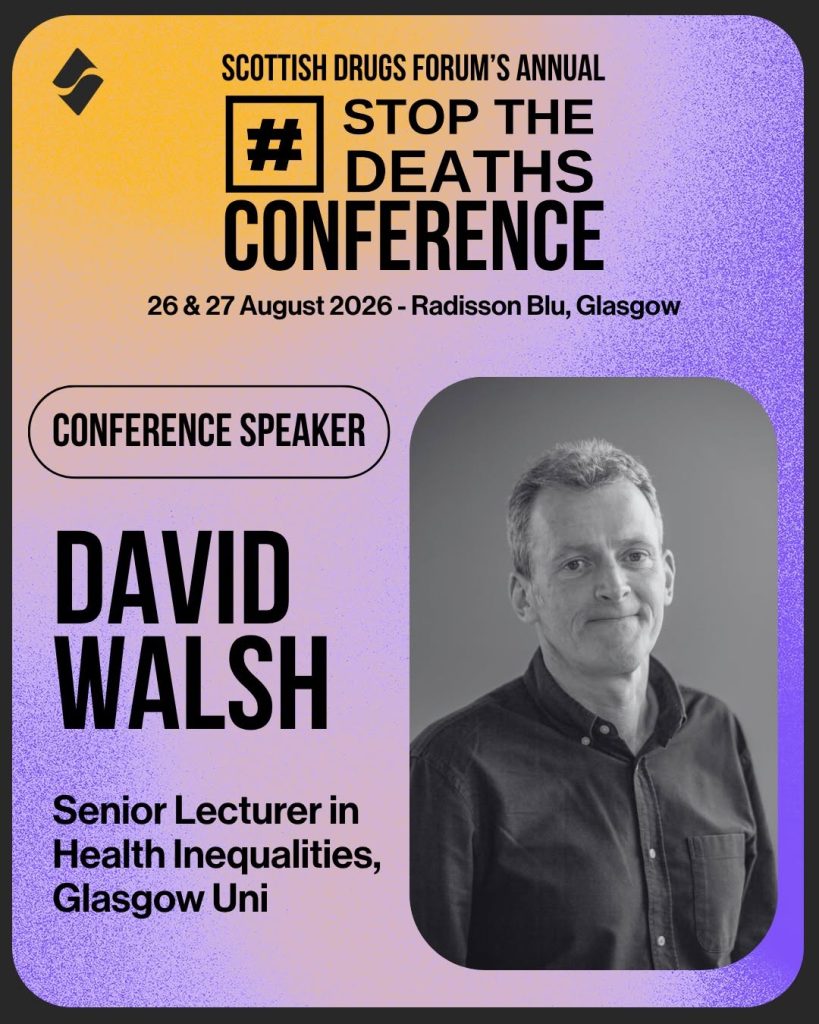
David Walsh
David will provide an overview of health inequalities and their profoundly political influences within Glasgow, Scotland and the wider UK. This will include the long-term historical context, as well as the dramatic and politically driven changes to inequalities seen across the UK over the last 16 years.
David is a Senior Lecturer in Health Inequalities at the @uofglasgow, where he has been in post since February 2024. He has more than 30 years’ experience in health inequalities research, including 17 years at the Glasgow Centre for Population Health prior to taking up his current role.
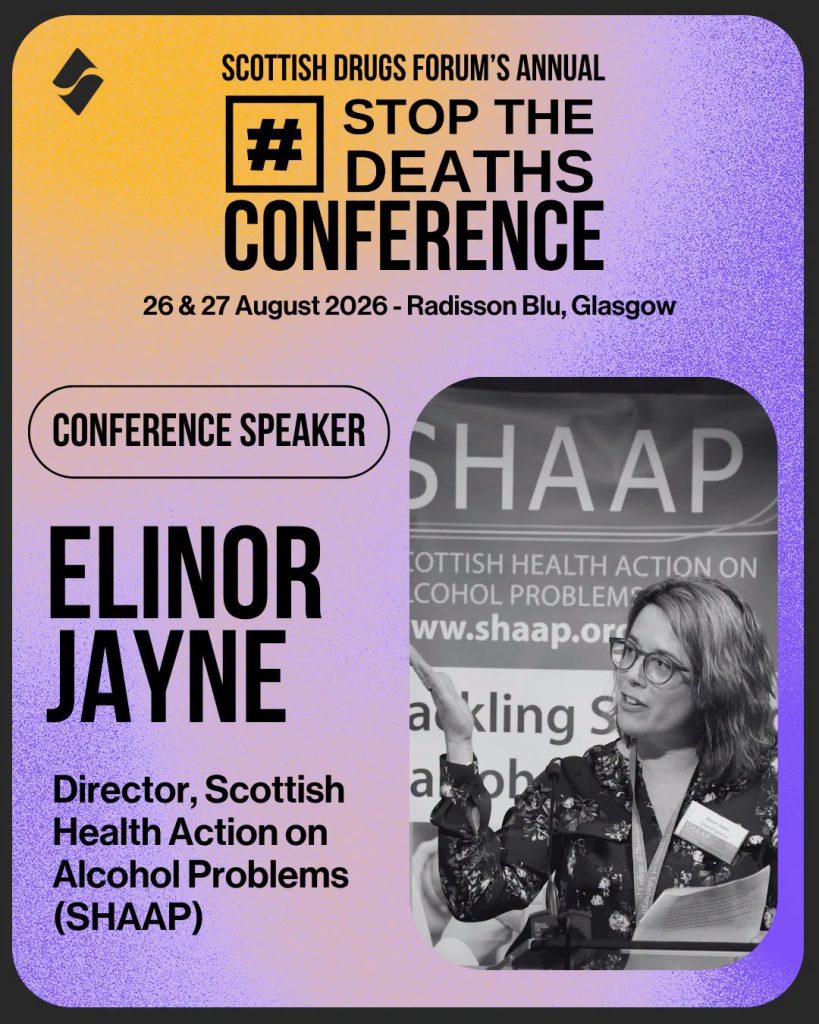
ELINOR JAYNE
Elinor will outline the scale and nature of alcohol harms in Scotland, what has been done to date, and what Scottish Health Action on Alcohol Problems (SHAAP) believes should happen next to reduce the number of people in Scotland negatively affected by alcohol.
Elinor is Director of SHAAP and brings extensive experience in influencing policy and representing organisations across Scotland and the UK. She has worked across a range of sectors, including leading the influencing team at national healthcare charity Sue Ryder, and previously held roles with the Royal College of Nursing, Edinburgh City Centre Management Company, and the Scottish Retail Consortium.
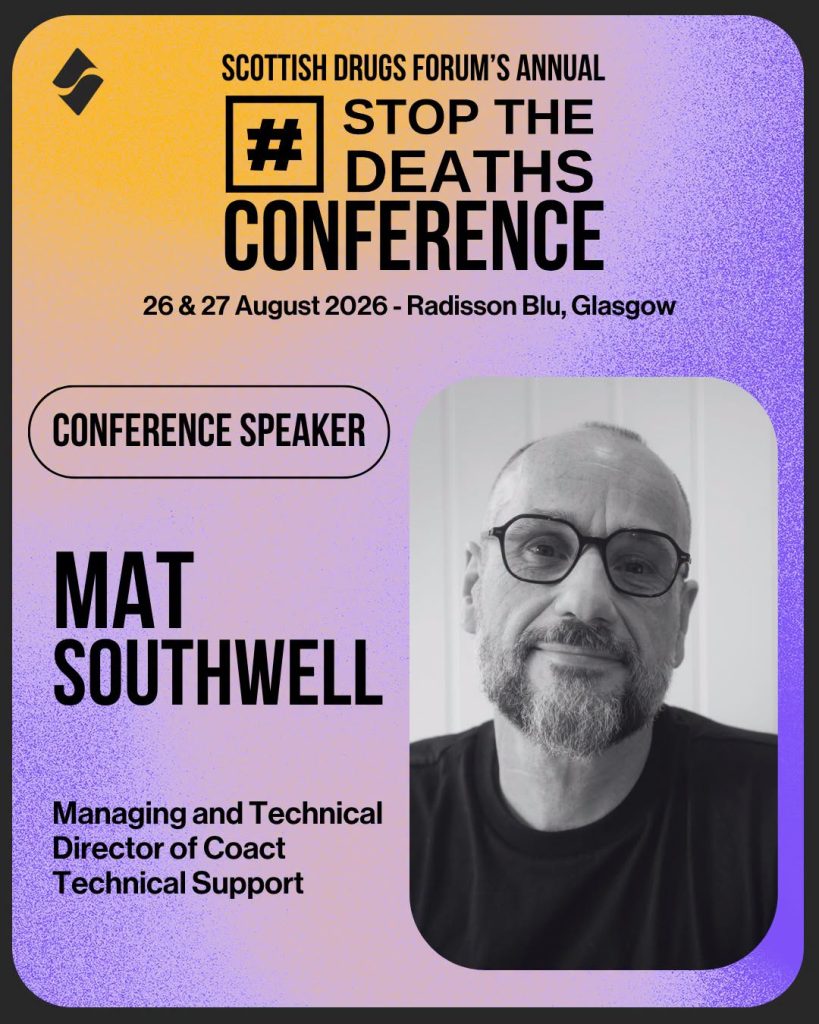
MAT SOUTHWELL
Mat Southwell will be speaking on Day 2 of our conference this year.
Mat’s presentation will explore the growing use of ketamine in the UK and the challenges faced by people who use ketamine in accessing appropriate support and treatment. The session will reflect on how the lack of a coordinated public health response has led ccommunities to develop innovative peer-led approaches to harm reduction.
Mat Southwell is Managing and Technical Director of Coact Technical Support, a community-led training and consultancy organisation working around the world to promote the health and rights of people who use drugs.
With extensive experience in harm reduction and community-led responses, Mat has been at the forefront of efforts to ensure the voices and experiences of people who use drugs inform policy, practice and service development.
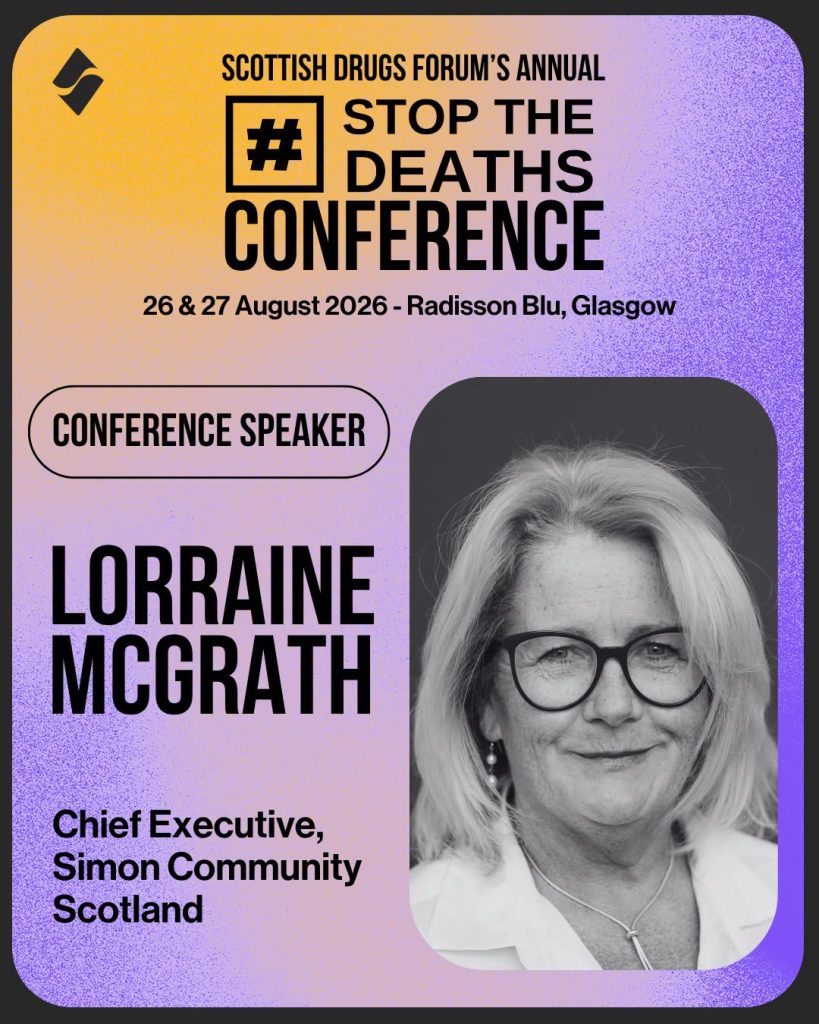
Lorraine Mcgrath
Lorraine’s will discuss the Simon Community’s Managed Alcohol Programme (MAP).
Simon Community Scotland is dedicated to combating the causes and effects of homelessness across Scotland. Lorraine has been its Chief Executive since 2012.
She began her career in mental health before moving into social care. For the past 30 years, she has held executive and senior management roles. Lorraine has contributed nationally and internationally to work on homelessness, rough sleeping, the National Drugs Mission, suicide prevention, veterans’ mental health and supporting people experiencing multiple and complex challenges.
Passionate about delivering impact, Lorraine is committed to empowering both the people receiving support and the frontline staff supporting them. She continues to be inspired by the resilience of people overcoming harm and trauma, and by the dedication of staff finding solutions to some of society’s most complex issues.
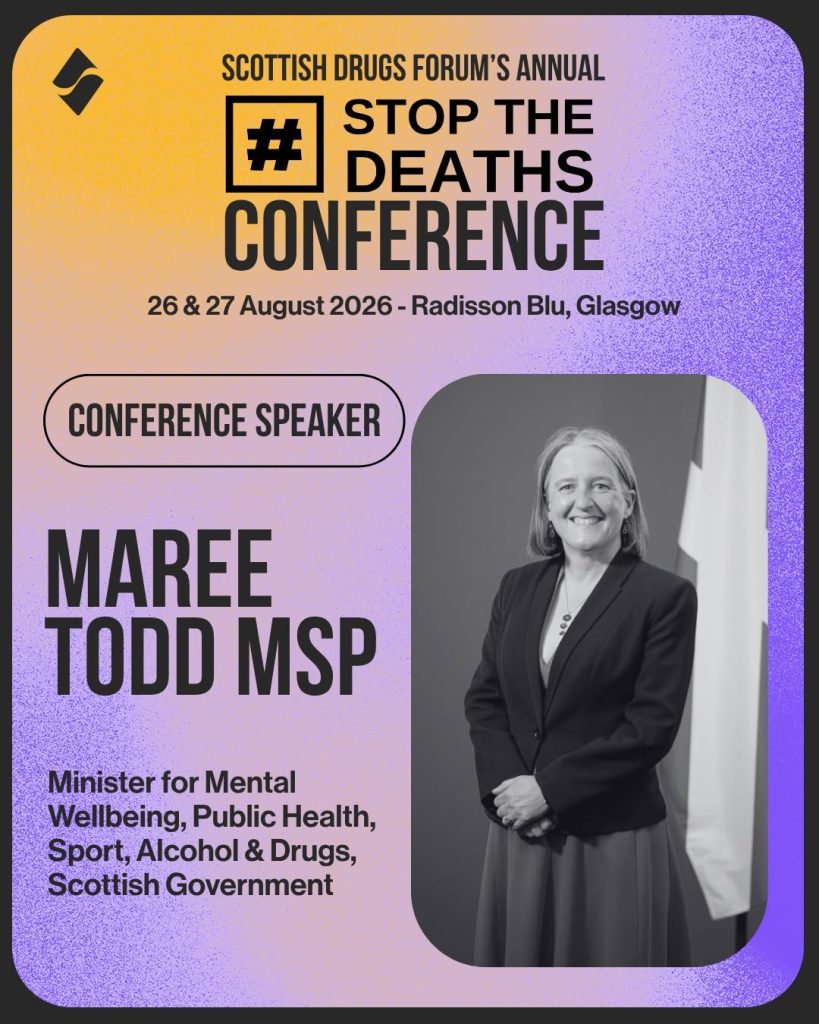
Maree Todd MSP
A pharmacist by profession, Maree worked in NHS Highland for 20 years, primarily as a mental health pharmacist in a psychiatric hospital. She previously served as Minister for Children and Young People before being appointed Minister for Social Care, Mental Wellbeing and Sport in March 2023. Following her re-election in 2026, she was appointed Minister for Mental Wellbeing, Public Health, Sport, Alcohol and Drugs.
We are delighted to welcome Maree to the conference as she opens this year’s event, setting the scene for two days of discussion, learning and collaboration focused on reducing drug-related harms in Scotland.
Alison Crocket
Alison Crocket
Whole Systems Unit Head, Alcohol and Drug Support Division, Scottish Government
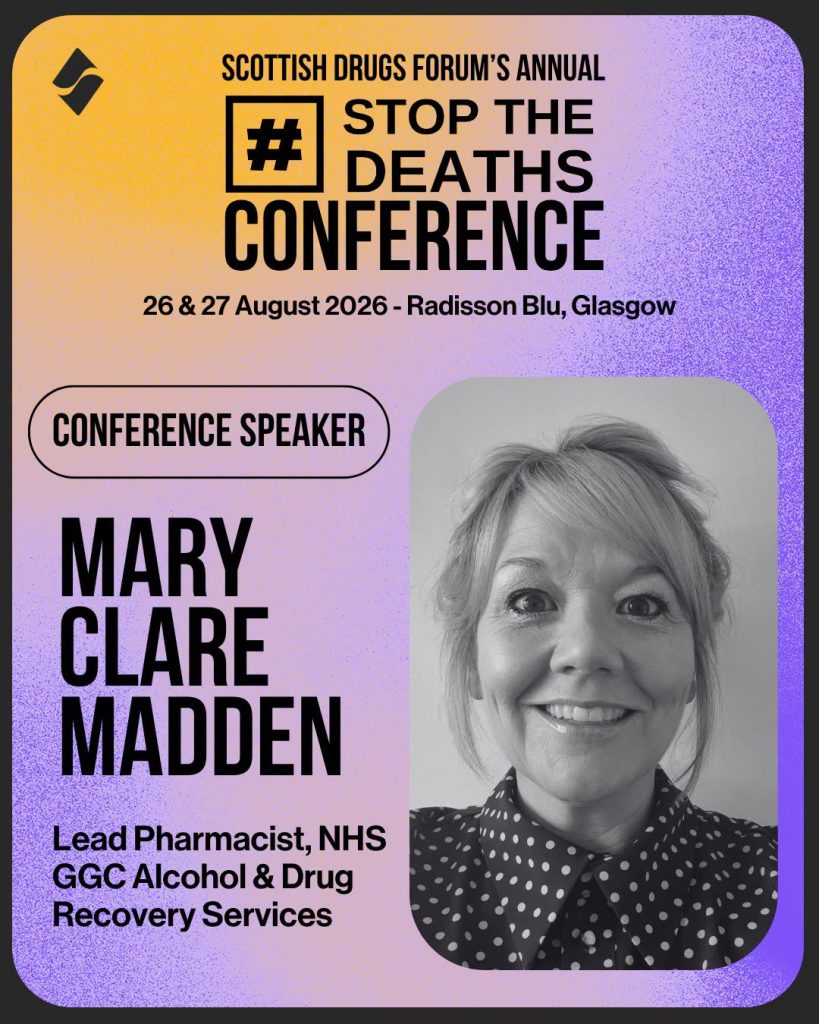
Mary Clare Madden
Mary Clare will provide an overview of Glasgow’s experience establishing a pilot point-of-care drug checking service as part of a national programme of work across Scotland. The session will explore the rationale behind the service, its delivery model, implementation process, key challenges, and the importance of partnership working.
Mary Clare is the Lead Pharmacist for NHS Greater Glasgow & Clyde Alcohol and Drug Recovery Services. She has worked within the organisation for 18 years and currently leads the Central Pharmacy Team, the Enhanced Drug Treatment Service Pharmacy Team, and the pilot Drug Checking Service.
Alongside leading these services, Mary Clare continues to work clinically within the Enhanced Drug Treatment Service and is the professional lead for the ADRS pharmacist prescriber workforce.
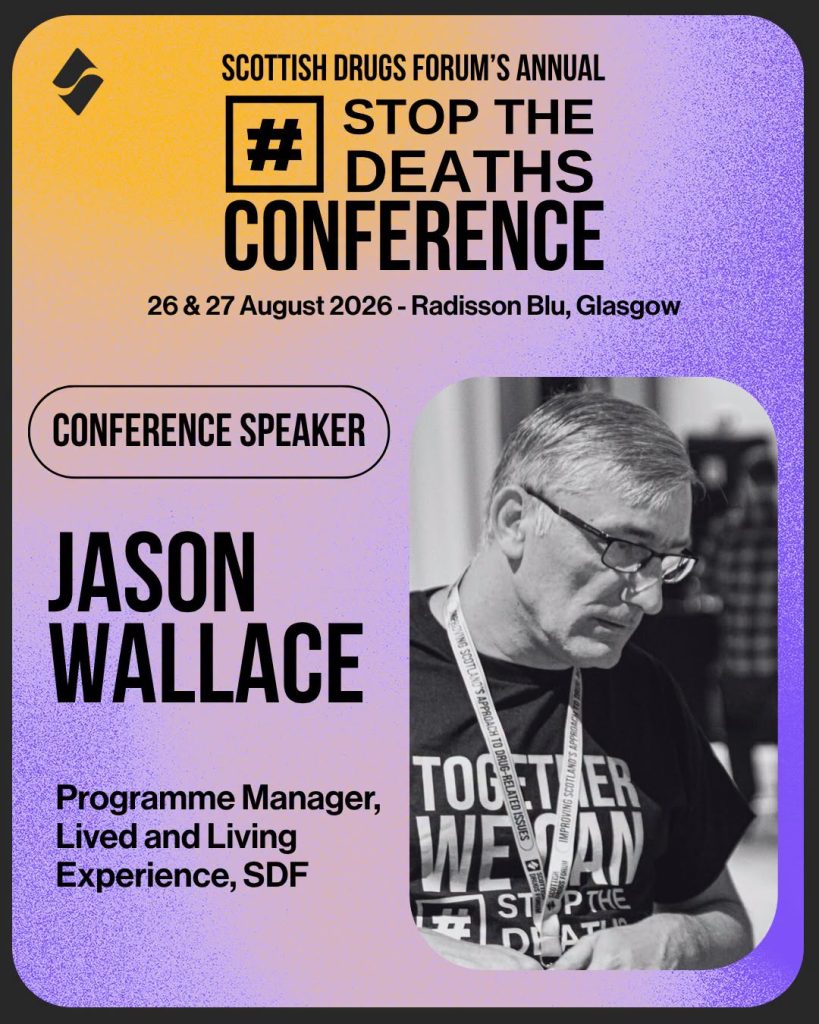
Jason Wallace
Jason Wallace, SDF’s Programme Manager of Lived and Living Experience, to the stage on Day 1 of the conference alongside delegates from Advocates for Change.
Advocates for Change brings together advocates, allies and grassroots voices to lead discussions on drug policy and practice in Scotland. Jason will introduce the Advocates for Change statement before leading a panel session highlighting the voices and experiences of people with lived and living experience.
Jason joined SDF through systematic progression from being a peer/peer research volunteer with SDF’s User Involvement activity to successful completion of SDF’s award-winning Addiction Worker Training Project. He assisted SDF National Naloxone Co-ordinator Kirsten Horsburgh with all aspects of the Scottish Government-funded National Naloxone Programme, including developing Peer Education Networks and delivering Peer Education Programme training.
Jason managed the Volunteer Engagement and Peer Research team for several years, then the Living Experience Engagement Team before becoming Programme Manager. He has a SVQ 2 in Health and Social Care and a SVQ 4 in Learning and Development.
Jason has also a few published research papers on (Trauma in the childhood stories of people who have injected drugs) Published 2015 Addiction Research and Theory; He coordinated research on (Older People with Drug Problems in Scotland) Scottish Government Report 2017, (Exploring the Health and Social care needs of older people with a drug problem) Published 2018 Taylor & Francis Drugs education and prevention policy.
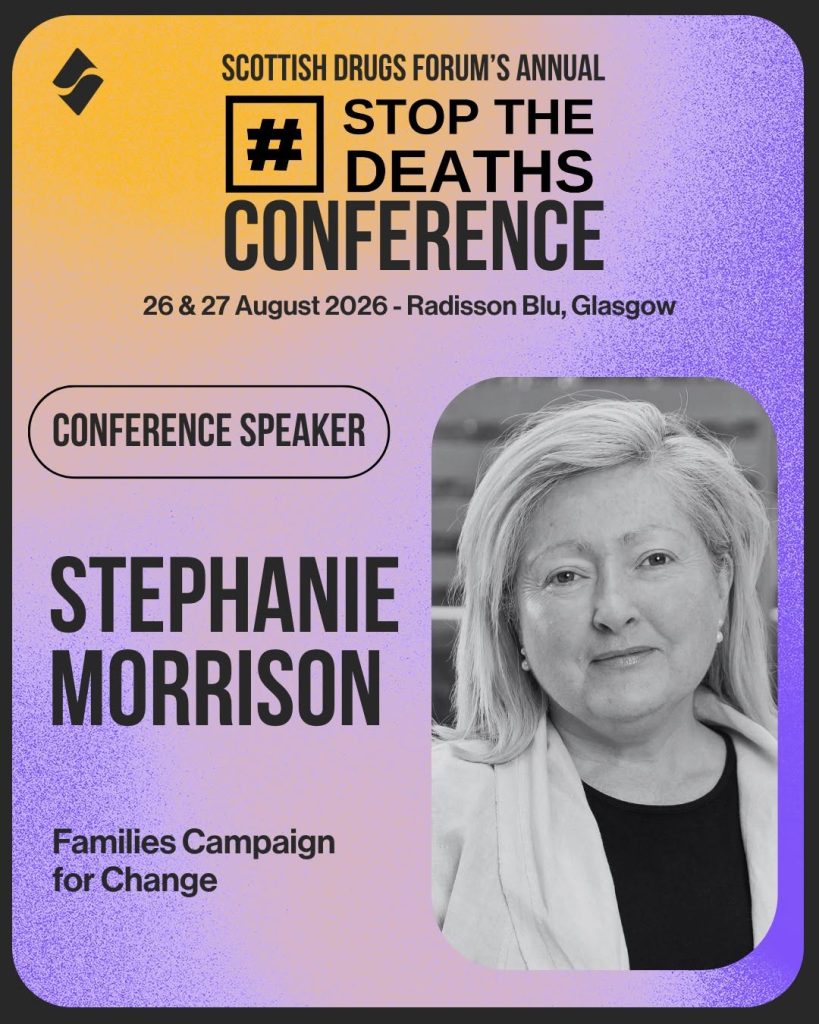
Stephanie Morrison
Stephanie Morrison will be speaking on Day 1 of our conference.
Stephanie’s contribution will explore the experiences of families affected by drug-related deaths and the importance of ensuring that families’ voices are heard in the development of policy and services.
Stephanie is a founding member of Families Campaign for Change Scotland, advocating for the inclusion of families lived experience in national policy and for families to be afforded parity of esteem in all aspects of drug policy and decision-making.
An occupational therapist and former higher education lecturer, Stephanie has a long-standing commitment to advocacy and amplifying marginalised voices. Her work has included projects supporting veterans in Scottish prisons and developing creative approaches that enable people with lived experience to share their stories and shape change.
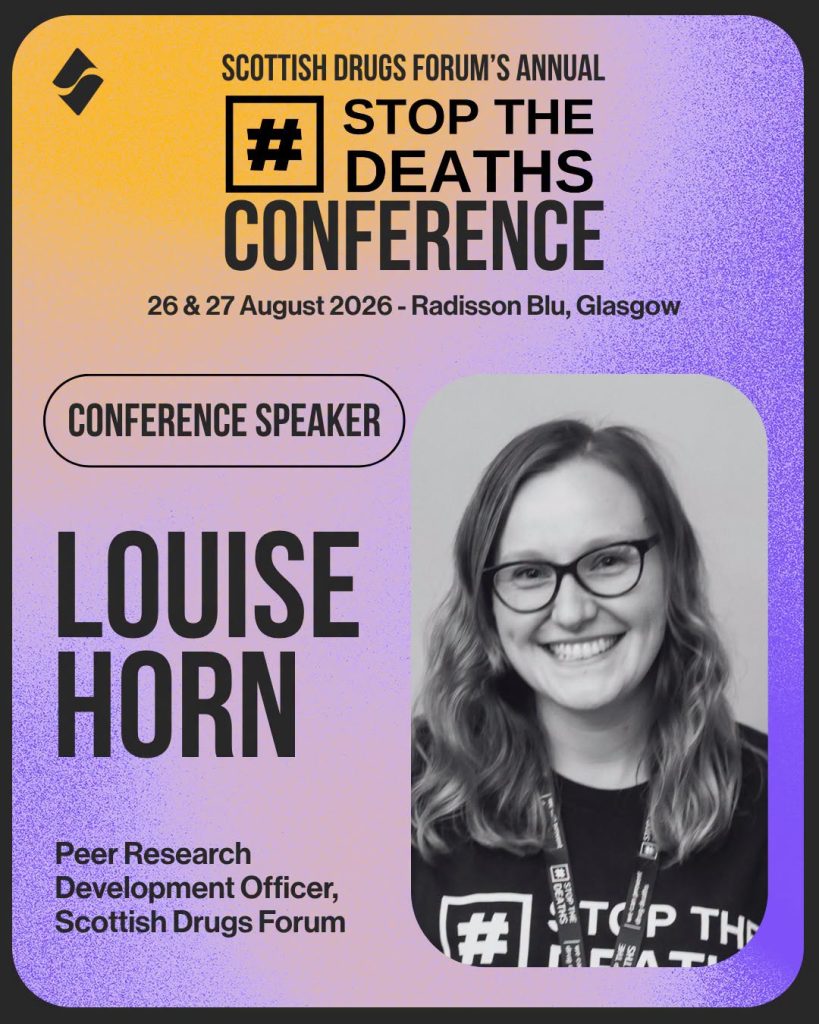
Louise Horn
Louise will present the findings of SDF’s report, ‘Experiences of MAT Standards implementation of people who use cocaine and crack.’ The session will explore the experiences of people who use cocaine and crack, alongside the experiences of staff supporting them, before highlighting recommendations to help inform future service improvement.
Louise is involved in the delivery of peer research and evaluation projects at SDF, including leading a national project evaluating the implementation of the MAT Standards. This work ensures the voices of those with living and lived experience inform decision making and service improvement.
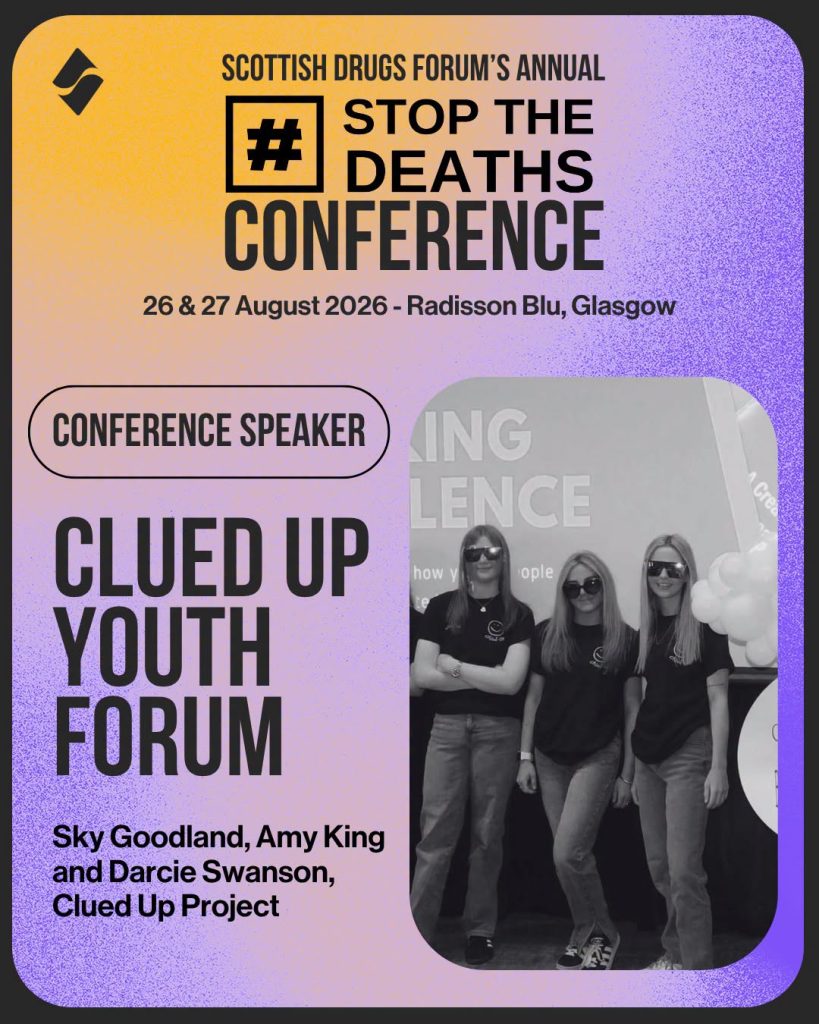
Clued Up Youth Forum
Sky Goodland, Amy King and Darcie Swanson from the Clued Up Youth Forum, part of the Clued Up Project, will be speaking on Day 1 of our conference this year.
Clued Up’s Breaking the Silence research is a peer-led project in partnership with Stirling University that explores how drug-related deaths affect young people, their families and communities. Led by Clued Up’s Youth Forum, the study gathered young people’s views on the emotional impact of bereavement, the support currently available, gaps in services and opportunities for prevention. The research highlights the need for more open conversations about drug-related deaths, improved access to support, and greater involvement of young people in shaping responses and reducing stigma surrounding loss and substance use.
Clued Up provides a comprehensive “youth friendly” substance use support and information service to young people 11 to 26 years old in the Fife area, also targeting the wider issues of general well-being and lifestyle. It provides education, prevention, early intervention and diversion for young people affected by their own or someone else’s substance use.
Advocates for Change: Grounding Conversations in Living Experience
Taking place ahead of the main conference, Advocates for Change brings together people with living and lived experience of drug use to reflect, connect, and lead. The insights and priorities shaped through this gathering will inform the content and structure of the Stop The Deaths 2026 Conference. This approach reflects SDF’s commitment to participatory policymaking and to centring the voices of those most affected in the response to drug-related harm in Scotland.
What to expect from Stop The Deaths
DrugReporter attended last year’s conference – watch their documentary to find out more.
You can also find recordings from previous conferences on our YouTube channel.
WE HAVE EXHIBITION STANDS FROM:










Booked your ticket?
Let your networks know you’re attending by downloading our social media pack.