
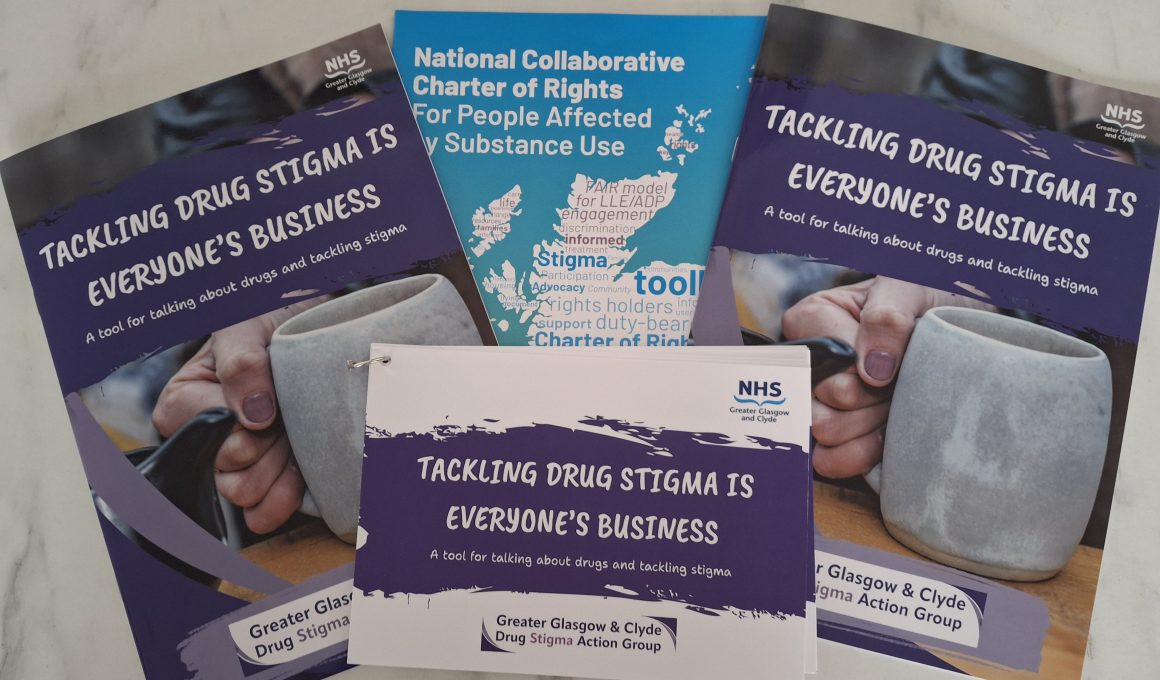
This week, SDF workforce development programme manager Adelle Still attended the launch of the NHS Greater Glasgow and Clyde Tackling Drug Stigma Toolkit. In this blog, she reflects on the power of collaboration, lived experience and the role we all play in challenging stigma.
It was a privilege to attend the launch of the NHS Greater Glasgow and Clyde Tackling Drug Stigma Toolkit and see the results of a fantastic collaborative effort aimed at reducing stigma and improving experiences for people who use substances.
I was delighted to be involved in the development of the toolkit. The project brought together a range of partners, each contributing valuable expertise and insight to create practical, accessible resources that support reflection, learning and positive change across the workforce.
What stood out most at the launch event was the shared commitment to tackling drug stigma. We heard powerful messages about the impact that language, attitudes and assumptions can have on individuals seeking support, their families and their communities. The toolkit provides an important opportunity for staff teams to explore these issues in a constructive way and to build more compassionate, person-centred approaches.
What makes this toolkit particularly valuable is that it isn’t just for specialist alcohol and drug services. People who use substances come into contact with many different services throughout their lives, from healthcare and housing to social care and community organisations. Wherever we work, we all have a role in reducing stigma and creating welcoming, respectful and non-judgemental environments.
Developing workforce resources that support culture change is a key part of my role at SDF, and this project reinforced the importance of working alongside people with living and lived experience. Their voices helped shape the toolkit and ensured that the resources are grounded in real experiences and practical learning.
The launch was both a celebration of what has been achieved and a reminder that tackling stigma is an ongoing journey. I am proud of our contribution to this work and look forward to seeing the toolkit support meaningful conversations, learning and positive change across organisations and services.
Together, we can continue to challenge stigma, improve understanding and create environments where people feel respected, supported and able to access the help and support they need.