
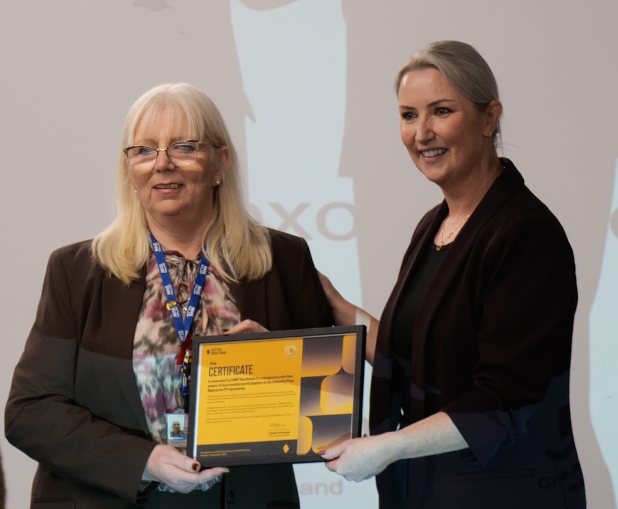
Nearly 2,000 people have been trained to recognise and respond to an opioid overdose at HMP Barlinnie over the past five years, thanks to a groundbreaking programme that puts people in prison at the heart of efforts to save lives.
This month marks five years since the programme was launched, bringing together Scottish Drugs Forum (SDF), NHS Greater Glasgow and Clyde (NHSGGC), Scottish Prison Service (SPS) and residents of Barlinnie in a unique partnership.
Naloxone is a safe and easy-to-use medication that can reverse the effects of an opioid-related overdose, keeping the person alive until emergency services can take over.
After completing a two-day ‘training for trainers’ course, developed by SDF and delivered by NHS staff, Barlinnie residents – known as peer mentors – can train others to recognise the signs of an overdose and respond using naloxone nasal spray.
Training is offered to everyone with a planned liberation date, regardless of their history of drug use. Those who complete the training are given a naloxone kit directly before their release, so they have it with them when they return to the community.
The first SDF peer training session involving take-home naloxone in a prison setting took place at Barlinnie in November 2021. To mark its fifth anniversary, representatives from across the partnership joined current and former peer mentors at Barlinnie to reflect on what the programme has achieved and discuss its future.
Our Chief Executive Officer, Kirsten Horsburgh, says: “This groundbreaking programme has made a real difference over the past five years, helping to prevent drug-related deaths and ensuring more people have the knowledge and skills to use naloxone when it is needed.
“We are grateful to the NHSGGC Health Improvement team and the Scottish Prison Service for working with us over the last five years. Of course, our biggest thanks go to all the peer mentors who give their time to increase knowledge and access to naloxone. Their contribution is helping to protect lives.
“Yet there is more to do. We would like to reach more people by expanding into all Scottish prisons, and we would like to ensure people who experience an unplanned liberation receive training and access to naloxone.”
Jennifer Butler, Head of Service for Prison Healthcare with NHSGGC, says: “Naloxone can provide a vital opportunity to intervene in an opioid overdose, but having access to it is only part of the picture. People also need the knowledge and confidence to recognise what is happening and understand how they can respond.
“By helping to increase understanding of what an opioid overdose can look like, improve access to naloxone and provide training in how to administer it, the programme gives people the skills to keep someone alive until the emergency services can get there.
“Five years on, the initiative has become a key part of local partnership efforts to reduce drug-related harm and improve access to potentially lifesaving knowledge and medication.”
SDF secured funding for the programme from the Corra Foundation and developed it in partnership with NHSGGC, with the Scottish Prison Service providing essential support for its delivery.
Sharon Holloway, Alcohol and Drug Strategy Lead at Scottish Prison Service, says: “Every drug-related death is a tragedy, and we know that timely intervention can save lives. The Naloxone Peer Champion programme equips individuals in our care with the knowledge, skills and confidence to support others, helping to increase awareness, build confidence and improve access to potentially life-saving naloxone.
“Peer-to-peer support can be particularly powerful in a prison environment. The ability of people with shared experiences to engage and influence one another has been central to the programme’s success, creating trusted opportunities for learning, challenging stigma and contributing to wider efforts to prevent drug-related harm and save lives.”
Five years on, our ambition is to build on the programme’s success, reach more people across Scotland’s prisons and give more people the knowledge and confidence to save a life.